ANNOUNCING MÓYÒSÓRÈ MARTINS’ SOLO EXHIBITION IN MILAN AND PARTICIPATION IN THE 61ST VENICE BIENNALE
The New York–based Nigerian artist debuts his first solo exhibition in Italy, at Upsilon Gallery, Milan, ahead of his participation in the 61st Venice Biennale—“In Minor Keys”- Curated by Koyo Kouoh
***New York, NY — MARCH 12, 2026 — Contemporary Nigerian artist Móyòsórè Martins, who lives and works in New York, will present his first solo exhibition in Italy this spring with The Great Boom!, opening at Upsilon Gallery in Milan on April 28th, and running through June 7th, 2026. The exhibition will run in tandem with the 61st International Art Exhibition, of the Venice Biennale, where Martins will represent the Republic of Sierra Leone in the National Pavilion of The Republic of Sierra Leone and ECOWAS (Economic Community of West African States).
Widely regarded as the most influential platform for contemporary art since its founding in 1895, the Venice Biennale will run May 9 (pre-opening on May 6th, 7th and 8th) through November 22, 2026, bringing together leading artists, curators, collectors, and institutions from around the world. Martins’ participation marks a significant milestone in the artist’s career and reflects his growing recognition as one of the most compelling voices among a new generation of globally engaged contemporary artists. Since relocating to the United States from Lagos, Nigeria in 2015, Martins has developed a distinctive visual language rooted in layered symbolism, psychological exploration, and personal mythology. Working from his studio in the Bronx, the artist builds dense painterly surfaces through a process of accumulation and erasure—scratching, layering, drawing, and embedding fragments of text and gesture into the canvas. These materially rich compositions reflect both a physical and emotional excavation, revealing traces of memory, identity, and lived experience.
The Great Boom! — Milan Solo Exhibition Opening April 28th, 2026, from 6:00-8:00 PM
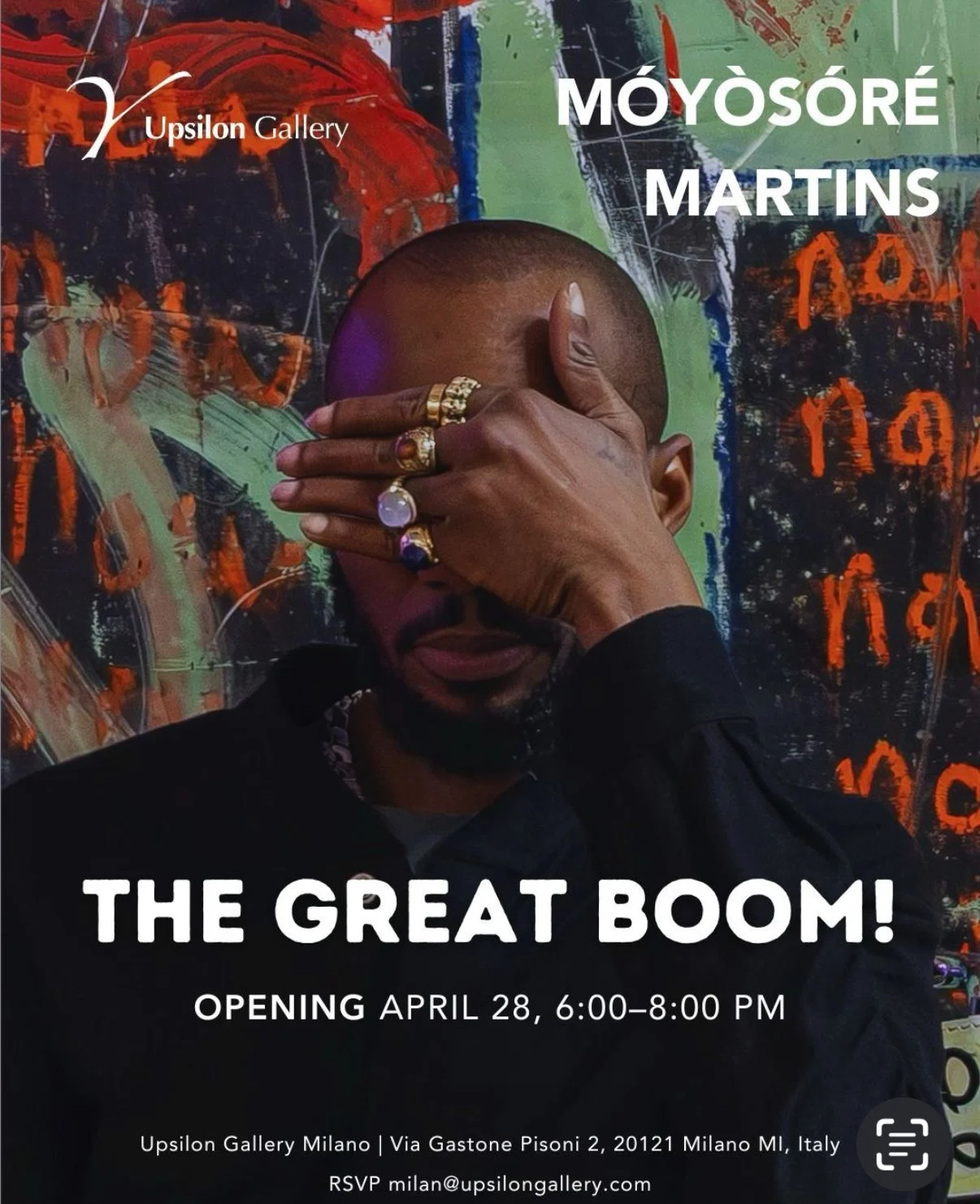
The Great Boom! at Upsilon Gallery Milan will present seminal works of Martins’ ongoing exploration of psychological presence, symbolic identity, and diasporic consciousness. The exhibition introduces The Great Eclipse Before The Great Boom!, a large scale work that features Martins’ “Watchman” archetype. Through layered compositions that combine figuration, abstraction, text, and symbolic mark-making, Martins creates emotionally charged surfaces where repetition, gesture, and fragmented imagery construct a powerful visual language. The Watchman has emerged as one of the central characters within Martins’ evolving visual mythology. First appearing in the years following his move from Lagos to New York, the figure has continued to transform across his paintings and works on paper, acting as both a sentinel and witness within the artist’s psychological landscape. Part protector, part observer, the Watchman embodies themes of vigilance, spiritual awareness, and self-reflection—serving as a symbolic presence through which Martins navigate questions of identity, displacement, and inner consciousness. "To host the first exhibition of Móyòsórè Martins in Italy in our Milanese gallery simultaneously with his participation in the National Pavilion of Sierra Leone at the Biennale di Venezia is definitely a great boom!”, said Marcelo Zimmler, Founder of Upsilon Gallery. The Great Boom! marks Martins’ first solo exhibition in Italy and serves as continued enthusiasm for Martins’ work by the international collector and institutional landscape.
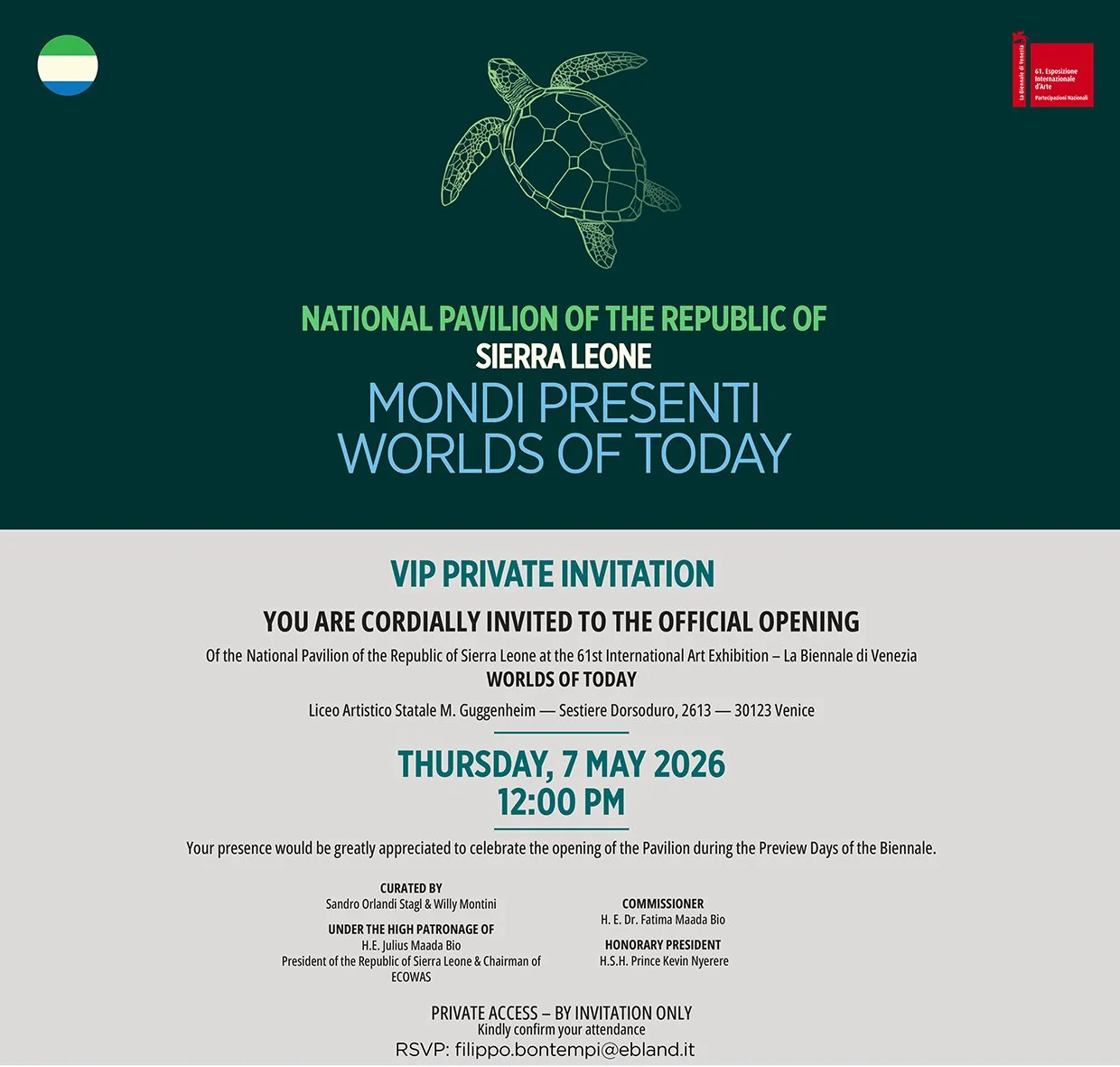
Venice Biennale 2026
Following the Milan exhibition, Martins will present Feed the Machine and In The Time of Place, two monumental works, at the 61st Venice Biennale, where he will represent the Republic of Sierra Leone in the National Pavilion of Sierra Leone and ECOWAS.The pavilion is presented by the Commissioner H. E Dr. Fatima Maada Bio and Curators Mr. Sandro Orlandi Stagi and Mr. Willy Montini.“I am excited for Móyòsórè Martins to be presented on the world stage in Venice this spring, and for him to continue to make his mark in the world and the international artistic landscape. This is a well deserved moment of recognition,” said Michelle Edelman, the artist’s international representation. The 2026 Venice Biennale will also feature the central exhibition In Minor Keys, curated by Koyo Kouoh, whose curatorial framework draws inspiration from musical composition to explore emotional registers, poetic gestures, and the subtle frequencies through which artistic meaning resonates. Martins’ work aligns closely with this framework. Through repetition, layered symbolism, and charged figuration, he transforms the canvas into a field of amplified visual language where image, gesture, and text converge to create urgency and emotional resonance.
About Móyòsórè Martins
Móyòsórè Martins is a Nigerian-born Contemporary Afro-Futurist artist based in New York whose work explores psychological states, symbolic identity, and the tension between inner life and external perception. Raised in Lagos and influenced by Yoruba cultural traditions, Martins draws upon personal mythology, spirituality, and diasporic experience to construct richly layered compositions that merge figurative and abstract forms. His paintings are characterized by distressed surfaces, scratches, embedded text, and sculptural layers of paint that reveal the artist’s process of continual construction and deconstruction. Central to his practice is the recurring Watchman figure—an evolving symbolic character that has appeared throughout Martins’ work since his move to the United States in 2015. The Watchman functions as an archetypal presence within the artist’s visual world, embodying themes of vigilance, awareness, protection, and transformation. Martins’ practice spans painting, works on paper, sculpture, and collectible design. His work has been exhibited internationally across the United States, Europe, Asia, and Africa and continues to gain recognition among collectors, curators, and institutions worldwide.
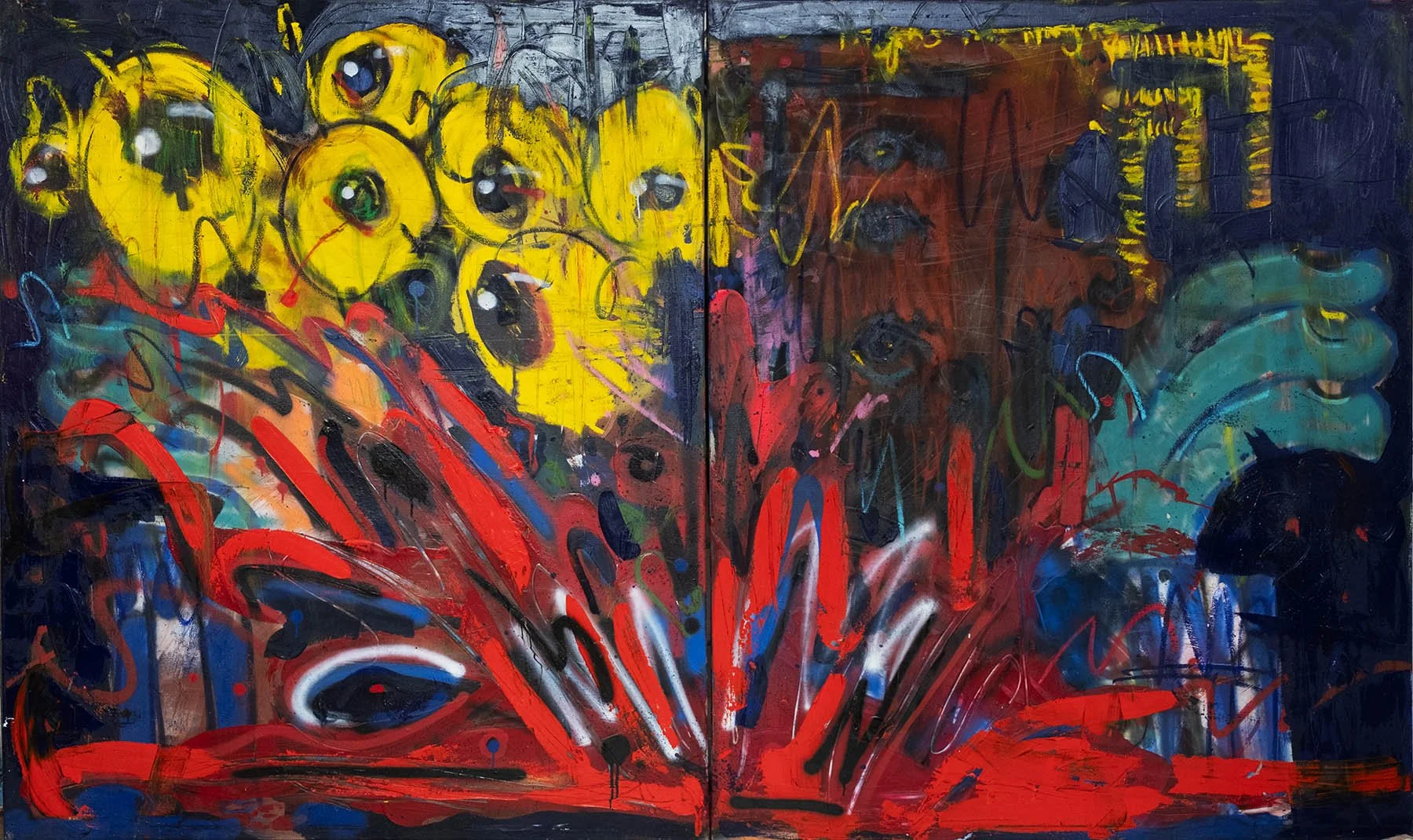
Móyòsóré Martins | Purge (Dyptich), 2025 |Oil, oil stick, pigments, aerosole and graphite on canvas | 72 x 120 in. (182.9 x 304.8 cm)

Exhibition Details
Móyòsórè Martins: The Great Boom! Solo Exhibition
Upsilon Gallery
Via Gastone Pisoni 220121 Milano
Exhibition Dates: April 28th—June 7, 2026
Opening Date: April 28th 6-8pm
61st International Art Exhibition — Venice Biennale National Pavilion of Sierra Leone—in collaboration with ECOWAS (Economic Community of West African States)
Exhibition Title: Worlds in the Making
Location: Liceo Guggenheim, Venice, Italy Exhibition
Dates: Public Opening May 9 (VIP Opening May 7th 12:00 pm)
RSVP filippo.bontempi@ebland.it)
Link to Venice Biennale website:
https://www.labiennale.org/it/news/le-partecipazioni-nazionali-e-gli-eventi-collaterali-della-biennale-arte-2026
Together, the Milan exhibition and Martins’ participation at the 61st Venice Biennale mark a significant moment in the artist’s expanding international career. For more information about Móyòsórè Martins’ work and the upcoming exhibitions, please visit
https://www.upsilongallery.com/https://www.instagram.com/upsilongallery/
https://www.traffic-nyc.com/artists/moyosore-martinsinstagram.com/moyosoremartins1910https://www.instagram.com/trafficarts_maarts/
Gallery Contact: Pierre-Yves Martinez pierre@upsilongallery.com
PR contact: CULTURESPUN anti-agency relations jo@culturespun.com
Artist Management: Michelle Edelman michelleve@traffic-nyc.com
Moyosore Martins in his Bronx studio, 2025 | Photo: Daniella Liguori © 2026